When Ken was on Demon Time

What up, Chompers! This post will detour from our Fear31 series for something more street. Today, Street Fighter, the live action film based on Capcom’s legendary fighting game franchise, debuted in theaters worldwide. In celebration, today’s post will focus on the attitude of my favorite fighter from the franchise: Ken Masters.

I have previously written about Ken at least twice on the Chomp, once about his fictional birthday and again about fatherhood. Something I have not fully covered is his fiery personality, which was at peak levels in the 1990s, especially in his profile picture and win quotes. Yeah, the original Street Fighter II Ken was a menace.

Released in 1991, the first iteration of Street Fighter II: The World Warrior brought back its original playable characters, Ryu and Ken Masters, along with eight new selectable fighters: the yoga master Dhalism from India; the American military mohawk phenom Guile; the hard-kicking Chinese Interpol agent Chun-Li; the sumo sensei E. Honda from Japan; representing Brazil, the original fighting game momma’s boy Blanka; and the pride of Russia (still known as the USSR), Zangief. Each character had a unique style and personality that made them some of video gaming’s most iconic characters, from Blanka’s green skin to Dhalsim’s stretchy yoga strikes.

Oh, and there’s Guile iconic theme music that goes with everything. No, seriously. Even Uncle Phil agrees:

One of the game’s most iconic features are its win quotes, which appear after a fight ends. The victorious fighter has some venom for their defeated opponent, and Ken had some of the most searingly savage words. I mean, dude was pissed.

From NeoSeeker. Not sure who uploaded it.

Look at the face. He is snarling after getting a win. It’s almost like he’s mad at poor Blanka for throwing hands with him. The fury was as real as at got for a fictional pugilist.

But as time went on, Ken’s attitude toned down a bit. He was still cocky and arrogant, but not as furious. For example, look at him in Super Street Fighter II.

From QuotesGram. Uploaded there by Claudette Keller from themadsobetero

Yeah, this version of Ken doesn’t hit the same. He’s too happy and smiley. The anger and vitriol are all gone. He just looks happy to be there. That raging fire isn’t burning so brightly here.

That’s all for now. Eventually, I have to see Street Fighter at some point. That franchise has been too central to my gaming and pop culture life for me to avoid it. Should be a fun watch at least. Until next time, folks.

FIGHT!!

Fear31 Update

Greetings, Chompers.

First, I must express my happiness with the reception to the Fear31 series. It has been a joy knowing that you read and like the articles. Unfortunately, my poor time management habits have resurfaced, and there will be no Fear31 post for today. Honestly, I am unsure if I will be able to do the longform articles and may have to switch to a shorter format.

I do apologize for the inconsistency. I will work at getting more content uploaded soon and improve my scheduling issues. Thanks for your support!

Peace & Pixels

Part XII: The Vampire

Greetings Chompers and welcome to another edition of Fear31! This series focuses on all things spooky in gaming, from its characters to its controllers. In this post, we will discuss one of the most famous and beloved creatures in all of horror: the vampire. Pop culture’s favorite bloodsucking beast has endured in video games for decades now. The first vampire epic in gaming that I encountered was Konami’s Castlevania series, specifically 1987’s Castlevania II: Simon’s Quest. The original two Castlevania games feature Simon Belmont, a member of the vampire hunting Belmont clan, in his fight against Count Dracula. Yes, that Dracula.

Oh, and Happy 40th, Castlevania. The decades whipped by.

In my last post, I stated that an older kid in my old neighborhood gifted me a copy of Ironsword: Wizards & Warriors II. What I did not mention is that the second game he gifted me was the aforementioned Simon’s Quest. As someone who’s mother raised him on the classic creature features of cinema, playing as a vampire hunter seemed like a fun idea. Plus, the game’s cover art rocked. Still does in my opinion.

From the Castlevania Wiki on Fandom. Uploaded there by LaVey.

Simon’s Quest takes place seven years after the titular hero defeats Dracula in the first game. Unfortunately for Simon, Dracula was so peeved about losing that he places a curse on the brave Belmont, which threatens to kill him early unless he revives Dracula by finding his remains. This rather wild start to an adventure finds Simon traversing the land of Transylvania, fighting monsters like the aquatic Mermen and skeletons with his family heirloom whip, the “Vampire Killer.” If that isn’t bad enough, Simon must complete his quest within a week or he doesn’t survive the curse.

Woof.

Unlike the first game, Simon’s Quest has a more open world dynamic that encourages exploration. You can even talk to some of Transylvania’s residents, who can give you advice, sell you items, or in the case of its clergy, heal your wounds. This immersion makes the game feel big and inhabited, although I often got lost. Part of the fun, though.

But if there’s one thing about Simon’s Quest that truly endures, it’s that soundtrack. This game not only has one of the best soundtracks of any game in the series, it has one of the best gaming soundtracks ever. Composed by the legendary team of Kenichi Matsubara, Satoe Terashima, and Kouji Murata, Simon’s Quest delivers absolute audio sorcery. Not only that, the game has one of the greatest electronic tracks ever made, “Bloody Tears.”

Later Castlevania games introduced notable Belmonts like Trevor (a version of whom appears in the Castlevania anime) and Richter, the player characters of Castlevania III: Dracula’s Curse and Rondo of Blood respectively. Dracula’s son, Alucard, is playabale Dracula’s Curse and is the main character of Castlevania: Symphony of the Night. Although I don’t think I’ve played Dracula’s Curse, I thoroughly enjoyed playing Rondo of Blood and Symphony of the Night on the PlayStation Portable’s Dracula X Chronicles, which includes the original Rondo of Blood, it’s remake, and SotN.

Regretfully, I sold that copy of Simon’s Quest like an ungrateful fool. Never sell your gifted games, kids. It is not worth the hurt. Keep them for as long as you can.

That’s all for now. If you get a chance, check out the Castlevania Wiki on Fandom for more information on Simon’s Quest and the Castlevania franchise in general. Until next time.

Peace & Pixels

Fear31 Part XI: The Wizard

Greetings Chompers and welcome to another edition of Fear31! This series focuses on all things spooky in gaming, from its characters to its controllers. In this post, we will discuss a common breed of enemy found in many fantasy video games, the wizard. But just discussing wizards in general is no fun. We need more specificity to make it Chomp. That stated, our wizard of the day is Malkil from the Wizards & Warriors franchise.

My childhood ruled. Despite some regrets about things I wished I had done or worse yet, had not done, I really offer no real complaints. I have a great and supportive family, my mother especially, and when the family struggled, the communities we lived in stepped up. Some of the video games I received were gifts by older kids in our neighborhood, and one of those games was Ironsword: Wizards & Warriors II.

As its title indicates, Ironsword is the second game in the Wizards & Warriors game series. Made for the Nintendo Entertainment System, the original W&W was developed by Rare and published by Acclaim Entertainment in December of 1987. It stars Kuros, a brave knight that must rescue the princess of Elrond from the villainous clutches of Malkil. A side-scrolling action and adventure title, players run, jump, and slash as they battle Malkil’s minions before eventually finding and defeating him at his castle.

Developed by the UK-based Zippo Games and again published by Acclaim, Ironsword hit the North American market in December of 1989. Once more, Kuros battles Malkil, this time in the land of Sindarin. After his defeat in the first game, Malkil has the bright of idea of transforming himself into boss versions of the four elements: wind, water, fire, and earth. To save the day, Kuros must find and assemble the shattered pieces of a weapon named “IronSword,” the only blade capable of defeating Malkil. In retrospect, imagine being so mad at taking an L that you make yourself elemental. That’s real player hatin’.

When I first played Ironsword, I had no idea what the franchise was about. Fortunately, the game has an awesome opening crawl that explains the first Wizards & Warriors‘ story to the tune of David Wise’s score, who composed the soundtrack for both games.

Playing Ironsword left me with some fond memories, especially Wise’s soundtrack. Nearly every track in that game is a banger. The side-scrolling gameplay was initially a bit awkward for me because I needed more practice with the game’s jump physics, which was only a minor nuisance for a short while. However, a lingering issue was the fight with Malikil’s Water variant, which still haunts me to this day.

Horrid looking fiend for real…

Still, the sense of exploration and fantasy entertained me for hours. Not only that, Ironsword has the greatest cover art of its generation, which features the legend himself, Fabio, as Kuros.

Glorious. From Wikipedia. Uploaded there by MuZemike.

My only regret about the game is that I sold it. As I’ve stated before and will do so in the future, do not sell your games, kids. You should especially keep the ones that people give as gifts.

Until time. If you want to learn more about the game, please visit its Wikipedia page, which offers some solid information.

Peace & Pixels

Fear31 X: The Monster

Greetings Chompers and welcome to another edition of Fear31! This series focuses on all things spooky in gaming, from its characters to its controllers. Admittedly, this series did not go as I had hoped. It was originally planned as a post-per-day activity but my poor scheduling skills undid the whole effort. That stated, today’s topic will cover one of the first monsters I encountered in video games: Dodongo from the original Legend of Zelda.

This February marked 40 years since the original Legend of Zelda debuted in Japan. Decades later, both the game and the franchise it launched remain one of video gaming’s highest benchmarks in terms of open-world exploration, swords & sorcery gameplay, and fantasy storytelling. In celebration of the franchise’s 40th anniversary, next month Nintendo will release a remake of its 1998 classic The Legend of Zelda: Ocarina of Time, which originally debuted on the Nintendo 64.

Set in the fictional land of Hyrule, The Legend of Zelda stars Link, a brave young boy who must save Princess Zelda from the evil wizard Ganon. In his quest, Link not only must traverse the surface of Hyrule, now besieged by monsters from Ganon’s army, he also has to face the dangers of the underground Labyrinths, which house bosses like multi-headed headed dragons and the topic of this post, the dino/rhino looking horned menace Dodongo.

From the The Legend of Zelda Wiki on Fandom. Uploaded there by Gunkbot.

The final boss of Level 2, the Labyrinth named “Moon,” Dodongo is a wide bodied creature with rock solid defense. Its armored skin makes it impervious to most attacks. When I first faced Dodongo, I learned very quickly that I could not hurt it the way I did other bosses. I was unsure of what to do, until the words of an old man gave us 80s gamers some advice.

In one of Moon’s rooms, you can visit an Old Man, one of the elderly men who appear throughout the game. When Link walks into the room where the Old Man waits, he gives Link some initially cryptid advice seen in the picture below:

Proof that we should listen to our elders. Uploaded to the Zelda Wiki on Fandom by Hylian pi

When I first saw this, I was intrigued but totally confused about what to do. Sure, I knew now that Dodongo disliked smoke, but where could I find some smoke? It wasn’t like Link could open a pack of Marlboros and give Dodongo a case of secondhand. What could I do? The mystery had me stumped.

I do not remember what exactly happened but I think that while fighting Dodongo, I desperately dropped a bomb close to the creature and my Mom realized that the smoke from the detonation hurt it. We continued dropping bombs near Dodongo until we eventually defeated the creature. In the video below, you can see Jade E’s fight with Dodongo for a visual.

This battle was the first time that I had to defeat a boss without using raw power or speed. I needed to solve the encounter like a puzzle, and heeding the old man’s words proved essential for victory.

Always good walking down memory lane for posts like this. If you want to learn more about The Legend of Zelda, I do recommend browsing through the game’s wiki on Fandom, where I found the pictures and information about Dodongo. Until next time.

Peace & Pixels

Fear31 Part IX: The AI (Repost)

Greetings Chompers and welcome to another edition of Fear31! This series focuses on all things spooky in gaming, from its characters to its controllers. Today’s topic: AI.

When I first developed an interest in electronics, the Nintendo Entertainment System was only a few years old. Computers were only in a fraction of American households and Ronald Regan still helmed the Oval Office (sheesh I’m old). Just seeing a character that you could move on a television screen was fascinating; us 80s babies were truly born doing a revolutionary time in home and, at the time, arcade entertainment.

Over the years video games continued their evolution. Mario went from a scrappy, pixelated hero to a galaxy-saving 3D polygonal pugilist. Environments became sharper. Enemies became more sophisticated. Music became more complex and orchestral. Watching all these technical advancements in real time has been magical.

Now, I am witnessing another evolution in tech, and as an older person, it leaves me with some questions. The era of artificial intelligence is here, and no longer refers to boss patterns in a game. Now, people use software like ChatGPT, a generative AI chatbot and Sora AI, which creates incredibly realistic sounds and images. It’s all equally impressive and terrifying. The days of telling what is fully created by humans and not purely generated by software may exclusively dwell in the past soon.

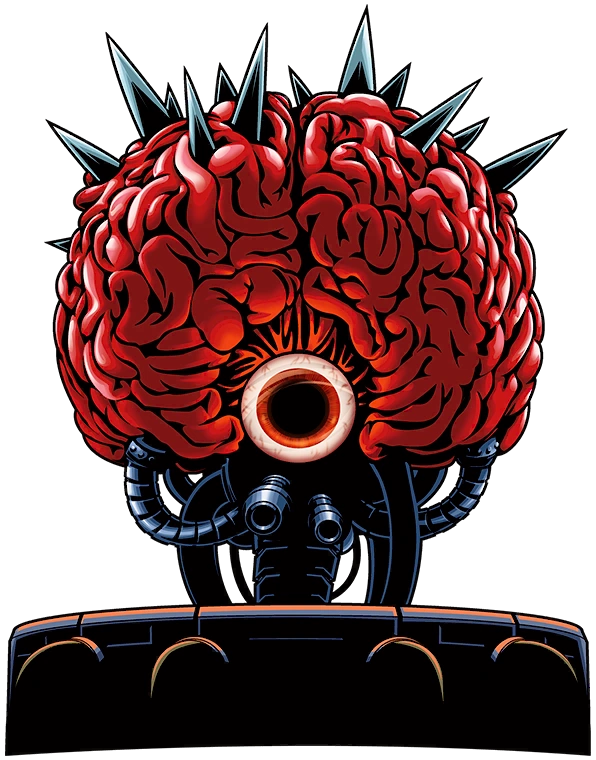
But this is a video game blog at its core, and a video game we shall discuss. Let’s go back to the 80s, 1986 to be precise, when a fierce bounty hunter named Samus Aran took on a malevolent cyber-organic supercomputer in the now classic game, Metroid. That computer’s name? Mother Brain.

Cold, cruel, and calculating, Mother Brain is one of video gaming’s most dangerous and onerous villains. Not only does she lead the Space Pirates, a notorious gang of intergalactic criminals, she also weaponized the Metroids, bioengineered creatures capable of incredible power and destruction. You think Aunt Gladys is bad? Holla at MB.

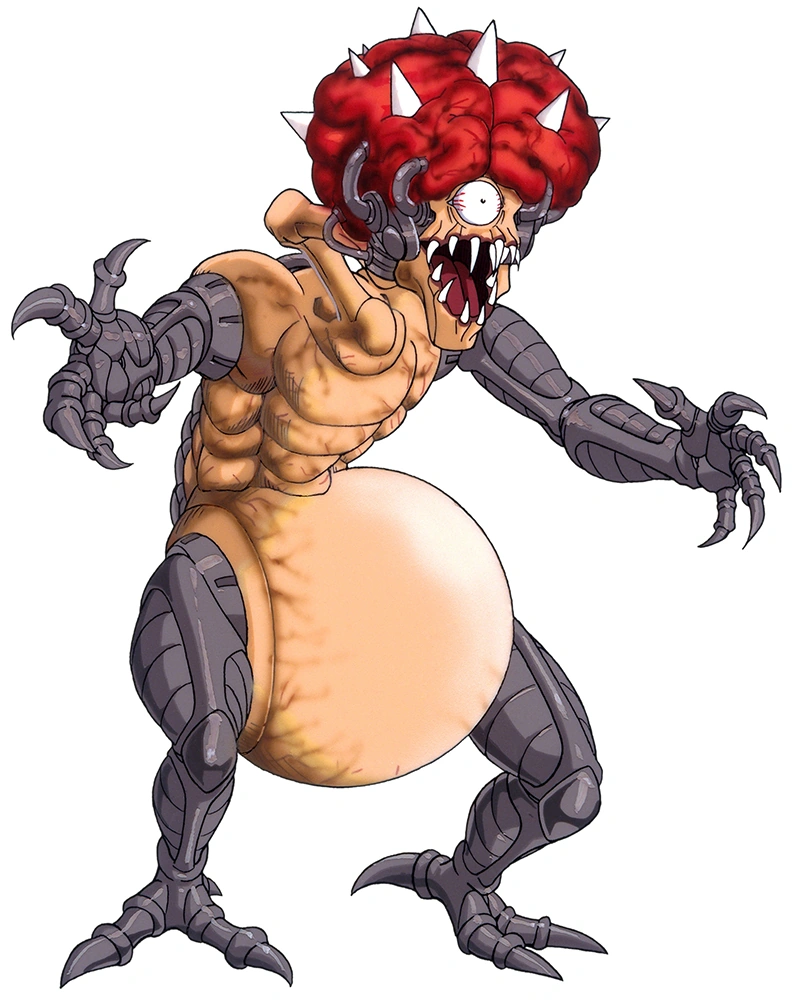
In the 1986 game, Mother Brain has the form of a giant cybernetic brain with a single, large eye. She resides in a giant glass container and just looks a monstrous force of evil. In Super Metroid, the series third entry, she has a new bipedal body, one that allows her to be equal parts Godzilla and her terrifying, malignant self.

Mother Brain is infamous for perhaps one of the greatest murders in 90s gaming outside of Aerith’s demise by Sephiroth in Final Fantasy VII. In Super Metroid, the series’ third title, Mother Brain obliterates the young Metroid named Baby, the creature Samus must find after its abduction earlier in the game. Baby sacrifices itself to protect Samus from the impending death blow by Mother Brain in one of video gaming’s most poignant final boss battles:

Uploaded to YouTube by Radley Carter.

Hater to the end, that Mother Brain.

I didn’t play Metroid as a child. I only knew of the game because it appeared on a poster that came with my NES. My experience with Mother Brain mainly came from the old Captain N cartoon that featured her as a villain voiced by Levi Stubbs of the Four Tops. Yeah, the 80s were different. Below is a video of MB’s insults from Captain N. Looking back on it, I guess the alphabetical nature of her disrespect helped my Mom to teach me the letters:

Uploaded to YouTube by BearHugs.

One day, perhaps any of the current AI programs may evolve into a Mother Brain of sorts. Oh wait, I guess it’s already happening. In preparation, I won’t be yelling at Google or Copilot anytime soon. Finally, be sure to check out Wikitroid, which provided the information and images for this post.

Until next time.

Peace & Pixels

Fear31 Part VIII: The Machine (Repost)

Greetings Chompers and welcome to another edition of Fear31! This series focuses on all things spooky in gaming, from its characters to its controllers. Today’s topic will cover an icon that transitioned to video games: The Terminator.

Nearly 42 years ago to the day, James Cameron’s The Terminator, his seminal horror/science fiction film, debuted in theatres. Directed by Cameron who wrote it with Gale Ann Hurd, the film tells the story of Sarah Connor, a young waitress who finds herself hunted by a near-invincible time-traveling cyborg named the T-800, more widely known as “The Terminator.” Helping Connor in her predicament is Kyle Reese, a weathered young soldier who also travels through time to protect her. What follows is a story of a violent rebellion against AI and machines, 1980s hair and fashion, and love found from a photograph.

The Terminator pushed 1980s to new heights in visually exciting yet grounded storytelling. It catapulted the great Arnold Schwarzenegger, who plays the villainous T-800 Terminator, into superstardom and helped to establish James Cameron as one of cinema’s greatest filmmakers. A direct sequel to the film, Terminator 2: Judgement Day, is considered by many to be one of the greatest action films of all time, delivering on spectacle, story, and state of the art visual effects.

As a child, I was familiar with the Terminator franchise because of T2, I even had one of the many action figures made based on the film, a battle-damaged T-800. However, I was largely unaware of the first film. I knew that it existed, but had never seen it, not even in its heavily-edited television form (a common occurrence for R-rated movies on broadcast TV; I thought RoboCop was rated PG-13 for years). That changed one fateful night in the fall.

In late 1993, my family moved a few block from the apartment where I spent my first years. It was a tough move littered with ill feelings and heavy hearts, but such is life at times. On one of our first nights in the new place, my mother and grandmother made certain that I had a television in my room and could at least have some entertainment. The only light in my room was the light from the television screen; everything else was swallowed in shadow. But that was fine by me. I was about to watch a movie with Arnold Schwarzenegger, the best action star on the planet in one of my most favorite roles. Watching The Terminator would be a joyous experience.

I was wrong. Oh, I was so very wrong.

Firstly, I had never seen Schwarzenegger as a villain. I only knew him as a hero. Seeing him as merciless killer robo– I mean cybernetic organism, terrified my young heart. He was a modern day monster made by new age Frankensteins and I was not ready for that life. I constantly peered over my shoulder expecting a T-800 to snatch me. Ah, the memories of a terrified and uniformed youth. Well done, Cameron.

But this is a video game blog, and a video game we shall cover. The Terminator franchise has many video games, ranging from the Nintendo Entertainment System’s adaptation of Terminator 2 to the more recent Terminator: Resistance on PC, PS4, and Xbox platforms. Today’s game however, is a gem from the Bethesda line of 90s Terminator first-person shooters: 1996’s SkyNET.

Released exclusively for MS-DOS and originally planned as an expansion pack to its predecessor, Terminator: Future Shock, SkyNET is set in the “Future War” time period of the franchise. At the time, the first two Terminator movies begin the future but largely tell stories that happen in the past. SkyNET, named after the malignant AI system that starts a nuclear Armageddon, bucks that trend by exploring the post-apocalyptic world we only glimpsed for a moment in the films. It made for a harrowing yet engrossing experience when I played it during my youth. I found myself in the shoes of a human soldier, dropped into this dark and devastated world, pursued by Terminators. The tension felt real.

Below is a trailer for the game:

Uploaded by barbarianbros

While using Wikipedia for my research, I found that Todd Howard, known for his creative acumen as a video game developer and his candor during Fallout showcases, was a producer and designer on this game. Makes sense that he transitioned to the Elder Scrolls I tell ya what.

In a world where AI is constant and smartphones seem to get smarter, I am often reminded that Google’s search engine may become SkyNET one day. Or maybe it will be Siri. Either way, I am glad that I saw the Cubs win a World Series with my family in 2016. Great times.

Until next time.

Peace & Pixels

Edit: Can’t believe I forgot this. You can literally shoot the moon in this game. Poor moon; it was only trying its best. Clipped from Full Install’s review of SkyNET on YouTube.

Fear31 Part VII: The Twin (Repost)

Greetings Chompers and welcome to another edition of Fear31! This series focuses on all things spooky in gaming, from its characters to its controllers. In true Chomp fashion, I’ve gotten well behind on these posts, but I’m going to get with it again starting today! For this post, we’re exploring the twin.

The twin is a mainstay of storytelling. Like the doppelganger, the twin can represent a different side of a character, demonstrating what could have happened had they pursued a different path or had a different personality. That stated, I Initially considered merging the twin and the doppelganger posts into one but decided against it for one character. The sad boi and smug edgelord from Devil May Cry, Vergil.

From VZenro’s YouTube channel.

Released in 2001, Devil May Cry began as Resident Evil 4 before eventually morphing into the action-adventure classic it is today. The game stars young freelance demon hunter Dante, the player character, as he takes on the forces of the demon king Mundus, who was responsible for the death of Dante’s mother, Eva. As the game progresses, Dante discovers that one of his recurring enemies, the powerful Nelo Angelo, is his twin brother, Vergil.

Whereas Dante gained fame as a brash and daring fighter, Vergil has a more calculated and reserved nature. He wields his sword with a confidence that teeters on arrogance and– ok, maybe he is arrogant. But doggone it he looks cool while fighting.

Vergil first became playable in the series’ third game, Devil May Cry 3: Dante’s Awakening: Special Edition. Although Dante fights with twin guns and mystic metal swords called Devil Arms, Vergil fights with spirit swords and devil arms of his own. When I first played DMC3‘s special edition back in college, I used Vergil. I liked his brooding style and spirit sword attacks because of the swag. Plus, I brooded a lot so vanity won again.

After eventually playing as Dante, I saw how different the two characters are both in personality and play style. Both characters are great, though. Dante’s wild nature suits him well, contrasting nicely with Vergil’s cold demeanor. Since Vergil is usually playable in special editions of DMC or its downloadable content, playing as him after Dante makes Vergil an effective foil to his sibling. Players get to see both sides of the devil hunters’ personalities and power.

What are some of your favorite twins in gaming? Let me know in the comments. Also, if you’re interested in learning more about the Devil May Cry franchise, please check out its wiki on Fandom. Until next time.

Peace & Pixels

Fear31 Part VI: The Doppelganger (Repost)

Greetings Chompers and welcome to another edition of Fear31! This series focuses on all things spooky in gaming, from its characters to its controllers. Today’s topic: the doppelganger.

If a character has been around long enough, especially a superhero, they usually get a doppelganger at some point. A speculative representation of a character’s alternate (and usually evil) history, the doppelganger essentially works as a mirror, demonstrating the opposite at its most extreme. From Superman and Ultraman to Goku and Turles, doppelganger’s show us the best, worst, and all in between of a character’s potential. In this post, we will cover a few of video games’ most iconic doppelgangers.

Link’s Shadow

Link is one of the most noble video game characters of all time. He constantly braves dangers ranging from wizards and skeletons to flying eyeballs and dragons without complaining. No, seriously. He hardly speaks outside of battle cries and screaming while falling. In his second adventure, 1987/88’s Zelda II: The Adventure of Link, he encounters his dark side manifested into a shadow. Link must battle his shadow as a test to prove himself worthy of getting the Triforce of Courage. Below, Tommy G’s YouTube video provides footage of Link’s battle with the character:

Other doppelganger versions of Link appear throughout The Legend of Zelda series. The Legend of Zelda: Ocarina of Time features an enemy character named “Dark Link,” a physical manifestation of dark energy that mirrors Link. The Legend of Zelda: A Link to the Past & Four Swords has a series of Dark Links, while The Legend of Zelda: Spirit Tracks has the character as a boss in one of its mini games. All of this information can be found on the character’s Zelda Wiki page at Fandom.

Wario

Mario has been a heroic fixture of video games and entertainment media for over forty years. A cheerful, brave, and kind combatant, Mario usually overcomes his enemies with a head stomp and a smile. So what does an evil version of Mario look like? How could one imagine such a character? Enter Wario, the greedy, grinning, and gargantuan powerhouse who antagonizes Mario then eventually becomes a hero of sorts.

Wario first appeared as the main antagonist in the 1992 Game Boy title Super Mario Land 2: 6 Golden Coins. Jealous of Mario’s success, Wario sought to overtake Mario Land and take the hero’s castle, which he eventually does. Further, Wario brainwashed the citizens of Mario Land and turned them against Mario, causing even more problems for the plucky hero. Of course, Mario eventually triumphs over Wario and reclaims his land, while the dastardly villain escapes to fight another day.

And fight he did. Since his initial appearance, Wario has become one of Nintendo’s most recognizable characters, both as a boss and as a playable character. His first playable appearance was in 1993’s Wario Land: Super Mario Land 3. He was later featured in several of Nintendo’s long running series like Super Smash Bros., Mario Party, and Mario Golf. He even has his own series of games, named WarioWare, which first debuted in 2003 on the Game Boy Advance.

Perhaps the first time I saw Wario was in a commercial for Super Mario Land 2, and I didn’t know who or what he was. Actually, I believe I asked Mom about him and I think she called him a doppelganger of Mario, which may have been one of the first times I heard the word. YouTuber RetroBits has a video of the commercial which I’ve provided below:

All of the information on Wario provided here can be found on the character’s Fandom page.

Mecha Sonic

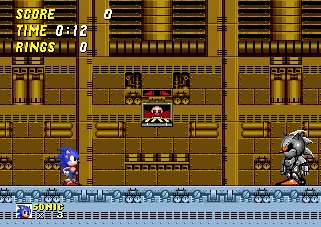
Over the past three decades, Sonic the Hedgehog has become one video gaming’s most mainstream and iconic heroes. Since his debut in 1991’s eponymous Sonic the Hedgehog for the Sega Genesis/Mega Drive, the Blue Blur has sped his way into many hearts around the globe. In 1992’s Sonic the Hedgehog 2, Sonic returned with new partner Miles “Tails” Prower to battle the evil Dr. Ivo Robotnik (originally named Dr. Eggman; Robotnik was given to him by Sega of America) who created a mechanized version of the speedster. Bulky, grey, and deadly, Mecha Sonic proved to be one of the bad doctor’s most fearsome creations, at least to a young me at the time. The robot was especially annoying because I had to fight it without rings, the Sonic games’ life force.

All the information presented here can be found on the character’s Fandom page.

This post offers only a snippet of video gaming’s most notable doppelgangers. What are some of your favorite doppelgangers in gaming? Let me know in the comments section. Until next time.

Peace & Pixels

Fear31 Part V: The Aerial (Repost)

Greetings Chompers and welcome to another edition of Fear31! This series focuses on all things spooky in gaming, from its characters to its controllers. Today’s topic: The Aerial.

Coming off our last post, which focuses on the dastardly Dog from Duck Hunt and briefly mentions its titular flying bird, I decided to focus on the evils that attack from the air. I’m using “Aerial” as a catch-all term for any airborne enemy, from the ones that fly to others that float or hover. No matter the mode of staying aloft, there is plenty of fear to be had in the sky.

Something about flying creatures bother me. Perhaps this stems from my fear of flying bugs as a child. During the summers in 1990s Chicago, numerous flying miscreants, ranging from wasps to moths, would enter our family abode. They made me squirm, honestly, especially the moths. They just looked weird, like butterflies cursed by Satan himself. Ugh.

Seeing airborne creatures in video games were just as harrowing, especially the circular ones from some reason. Those balls of bestial belligerence, the Cacodemons from DOOM definitely perturbed me, despite being… weirdly cute. Yeah, Cacos are somewhat adorable in their floating evil existence. YouTuber GamerOver-pg tells the story:

https://youtube.com/shorts/Z_joamsNVZk?si=PBGWdSvhuEdD7k4E

The same can be said of Duke Nukem‘s Octabrain. Just listen to the yell and witness that gaping maw in JRester’s YouTube short:

Madness.

But as horrid as these creatures are, they at least have a somewhat cute demeanor. Maybe its the semi-smiling face or the more animal-like nature. They’re like the pets some deranged maniac from hell or an alien world have in their care. Or maybe they’re not deranged. We are probably the true maniacs, myself especially.

The next creature is the worst, though. This one I could not tolerate under any circumstance. Once I saw it, my eyes lamented witnessing its existence. That creature is Quake‘s Scrag.

Nothing is cute about that one. Nothing. It has no redeeming qualities for me. Even the creature’s official description says it’s “Ugly as hell.” Get it out of my night terrors, please.

Friggin flying nightmares. Fly swat ’em all and let The Orkin Man sort ’em out. Until next time.

Peace & Pixels

Fear31 Part IV: The Dog

Edit: This post went unpublished last year. Embarrassingly, I went from Part III to Part V without this one.

Greetings Chompers and welcome to another edition of Fear31! This series focuses on all things spooky in gaming, from its characters to its controllers. Today’s topic: The Dog.

Dogs are great. They truly are humankind’s best friend. Even the worst dog is still greater than almost anything else on four legs. I even appreciate those terrifying Dobermans that my cousin had (may he rest) when I was a child. Honestly, I even have a soft spot in my heart for Resident Evil‘s zombie dogs, annoying and savage as they may be. Shout to Gaming Haven for the YouTube short:

As a child of the 1980s, my first video game machine was the Nintendo Entertainment System. I cherish that console; an Action Set with the orange Zapper (a light gun) and a copy of the games Super Mario Bros. and Duck Hunt on the same cartridge. It was a dream bundle that warmed a little child’s heart on Christmas.

Duck Hunt was first released on Nintendo’s Family Computer AKA Famicom (the NES’s Japanese progenitor) in April of 1984. Duck Hunt is a light gun game, meaning that it requires a light gun accessory to play. Players point the light gun at their television screen and pull the trigger when they get a clean shot at a duck. If successful, the duck gets hit and falls from the sky. If not, something horrible happens.

Something very, very, horrible.

If you fail at hitting any ducks or meeting a certain score, you see the little bastard in YouTuber DSN.001’s video below.

Oh, how I loathe this dog. Even now I can’t stand his sniggling face. He almost made me despise dogs and what kind of person would I be? Dogs are awesome! Only Cruella de Vil can hate dogs and still be somewhat cool.

I can’t say that I feared this character but I always dreaded seeing him when I failed. It was one of the first examples of negative reinforcement that I experienced as a kid. In hindsight, I am glad that it happened. It taught me that standards exist in life and if you’re not up to code, you get the cackle.

But this guy still boils my blood. My grandmother didn’t like him either. Lousy runt.

OK, that’s enough of getting triggered by an over 40-year-old game. See you in the next one.

Peace & Pixels

Fear31 Part III: The Skeleton (Repost)

Greetings Chompers and welcome to another edition of Fear31! This series focuses on all things spooky in gaming, from its characters to its controllers. Today’s topic: the skeleton.

I’m not sure when I first saw The Legend of Zelda. It may have been in one of those glass cases that Woolworth stored their video games. It may have been the Game & Watch version that I saw in a department store, possibly Zenith (I miss Zenith). However it happened, what I do remember is being mesmerized by its aesthetic and story. The game features a classic tale of a young adventurer, in this case the series’ protagonist Link, who fights to rescue Princess Zelda from the evil Ganon and save the kingdom of Hyrule. I asked my Mom for a copy of The Legend of Zelda for my 5th birthday and despite some tough financial times, she delivered as always. When I arrived home from school to celebrate, a copy of The Legend of Zelda awaited me.

The game cartridge itself was gorgeous. It was gold plated and glistened in light. The cartridge came with a beautifully designed cardboard box, decorated with this metallic shield on front cover. Within the box was a printed instructional manual (a rarity today), a poster, and a map of Hyrule, the game’s world.

Hyrule is one of video gaming’s earliest open world settings, and while traveling through it you will encounter several unique place and enemies. The game’s underground levels, known as “Labyrinths,” are essentially large dungeons filled with danger and doom. These sprawling deathtraps are so ominous that the game’s music changes from a version of its iconic main theme to a haunting and eerie piano number. One enemy that appears often in the Labyrinths are the dual sword wielding skeletal knights named Stalfos.

The original LoZ‘s Stalfos are not very tough. A few slices of any sword usually defeats them easily, but facing a crowd of them while low on health often proves dangerous. I mainly remember them because I found their wiggly gait humorous. Sometimes they even held items like keys or rupees (currency in the Zelda universe) that you could collect after defeating them. Since they are skeletons, you could see what item the Stalfos held through their body. Hilarious.

Admittedly, I have not played many Zelda games so I was unaware of how the Stalfos evolved throughout the series. Below is a YouTube short by Zelda Historia chronicles the character’s visual evolution:

Some of these versions, like the one from Ocarina of Time, look really intimidating. That iteration looks like it can do some damage. I really should finish the game. For shame!

However, this post is about fear. As fun as the Stalfos is, the skeleton enemy reaches its worst depths in another legendary video game series: Castlevania.

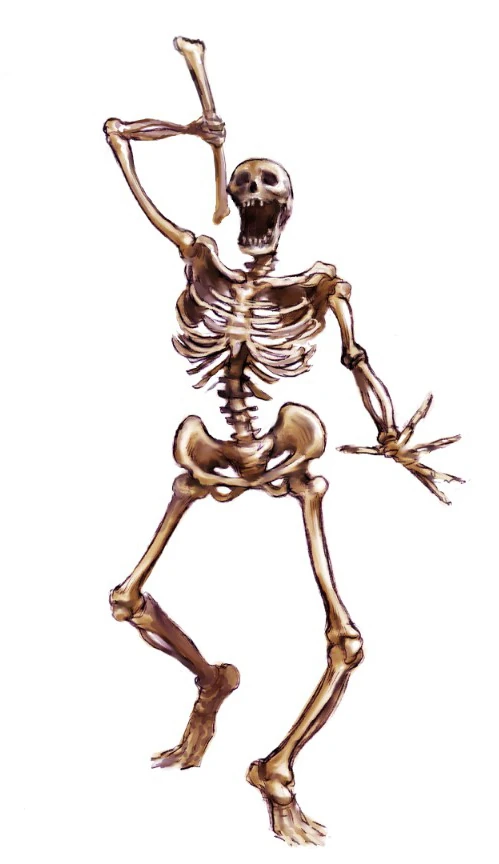
For nearly 40 years, the Castlevania games have tasked players with entering Dracula’s castle and defeating him and his minions, be it as a member of the Belmont Clan or his dhampir son, Alucard. But sweet mercy, Konami really wanted us to suffer against their skeletal scuzzbuckets. It’s one thing to get a basic skeleton warrior, which Castlevania has, but it’s another to get an entire litany of skeleton enemies. Seriously, that list contains several categories of skeletons, ranging from “Regular” and “Armed” to “Magical” and “With Occupations.” That’s right. Not only do these skeletal menaces stop at nothing to destroy you, some of them do it with a side hustle.

Let us pray.

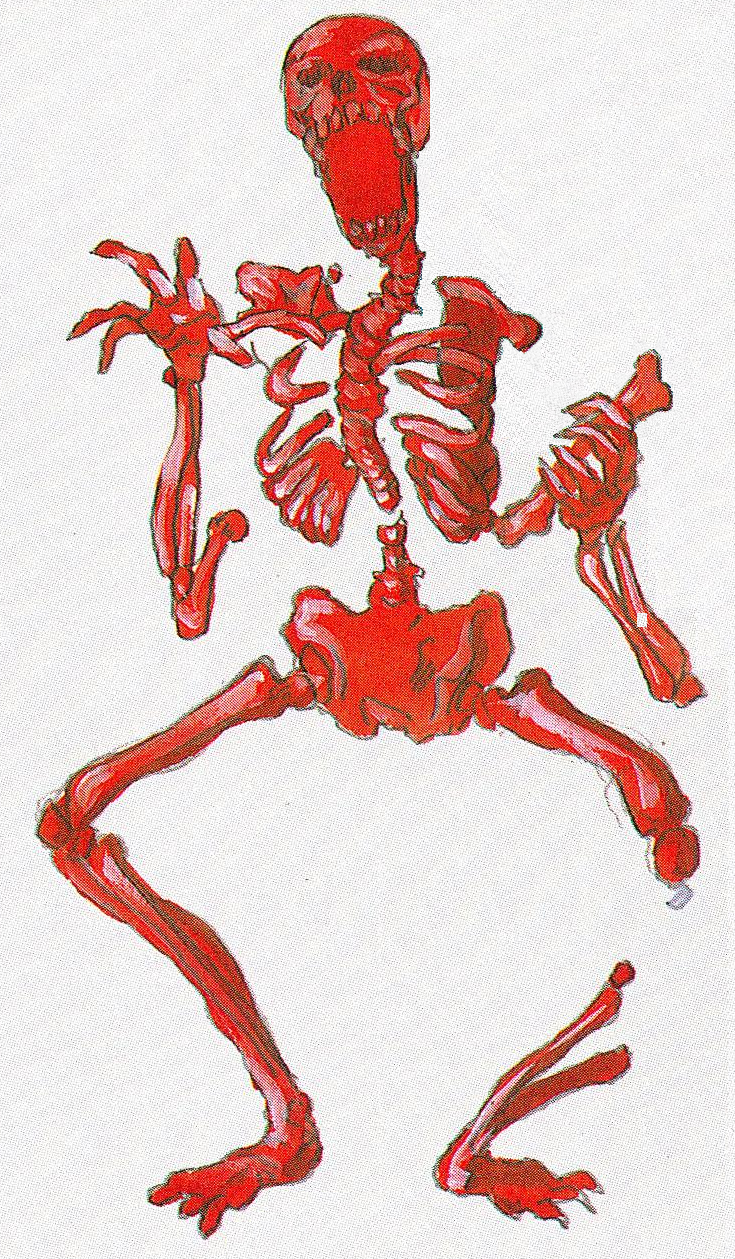
Of all that crazy, one skeleton stands above the rest in its hideousness: the Red Skeleton. It just won’t die. It won’t. Hit it as you might with the Vampire Killer or the Alucard Sword or any kind of anything, it just regenerates. It even sounds weird when beaten, especially in Castlevania: Symphony of the Night, in which it sounds like a bunch of bones crashing onto a marble floor. Actually, that’s quite true to form considering how baller Dracula’s castle floors are.

But the skeleton is not always terrible in video games, at least not for the player. If you’ve ever played any game that features a Necromancer, a wielder of the dead, skeletons can be quite fun! In the Diablo games, I almost always start with the Necromancer class first because I can use a skeleton army. Behold this short from YouTuber Indigenous Poncho:

Ah. The Power.

That’s all for now. And remember, Stalfos are cool and Red Skeletons are gruel. Actually, gruel is better. Until next time.

Peace & Pixels